📱 $200 Tablet Face-Off: 120Hz Display & Real-World Usability Test
If you’ve searched “best tablet under $200,” you already know the problem: every listing photo looks the same, every seller claims “flagship performance,” and half the specs sheets are copy-pasted nonsense. 📱
We pulled apart two of the most-searched budget picks right now — the Teclast T65 and the Lenovo Xiaoxin Pad 11 (2025) — to see which one is actually worth your money, and which one is just good marketing
Quick note on how this comparison came together: I pulled the official specs for both the Teclast T65 and Lenovo Xiaoxin Pad 11, checked what retailers are actually charging right now, and spent real time using both tablets side by side — screens, everyday tasks, the usual stuff you’d actually care about. Bottom line, if you’re on a budget, you shouldn’t need to wade through marketing fluff just to figure out which one actually delivers more. One thing though — screen feel and performance can vary a bit depending on what apps you’re running and how you personally use the tablet, so don’t be surprised if your experience isn’t identical to mine.
Quick Verdict
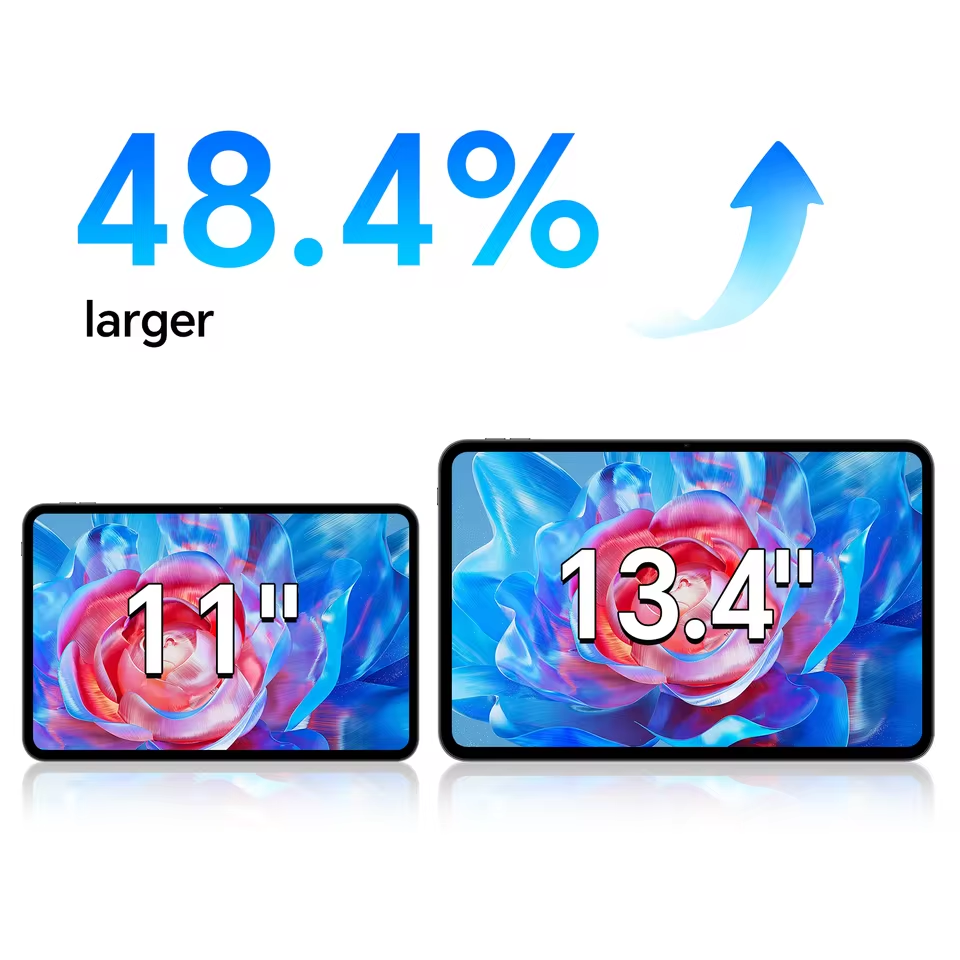
Screen quality is where the Teclast T65 pulls ahead on paper — you’re getting a 120Hz refresh rate and a bigger 13.4″ panel, and it costs less too. That said, if you’d rather stick with a trusted brand and don’t mind a slightly smaller screen, the Xiaoxin Pad 11 might actually be the smarter buy overall — let’s dig into why.
🟢 1. Teclast T65 — $190.69 (Welcome Deal)
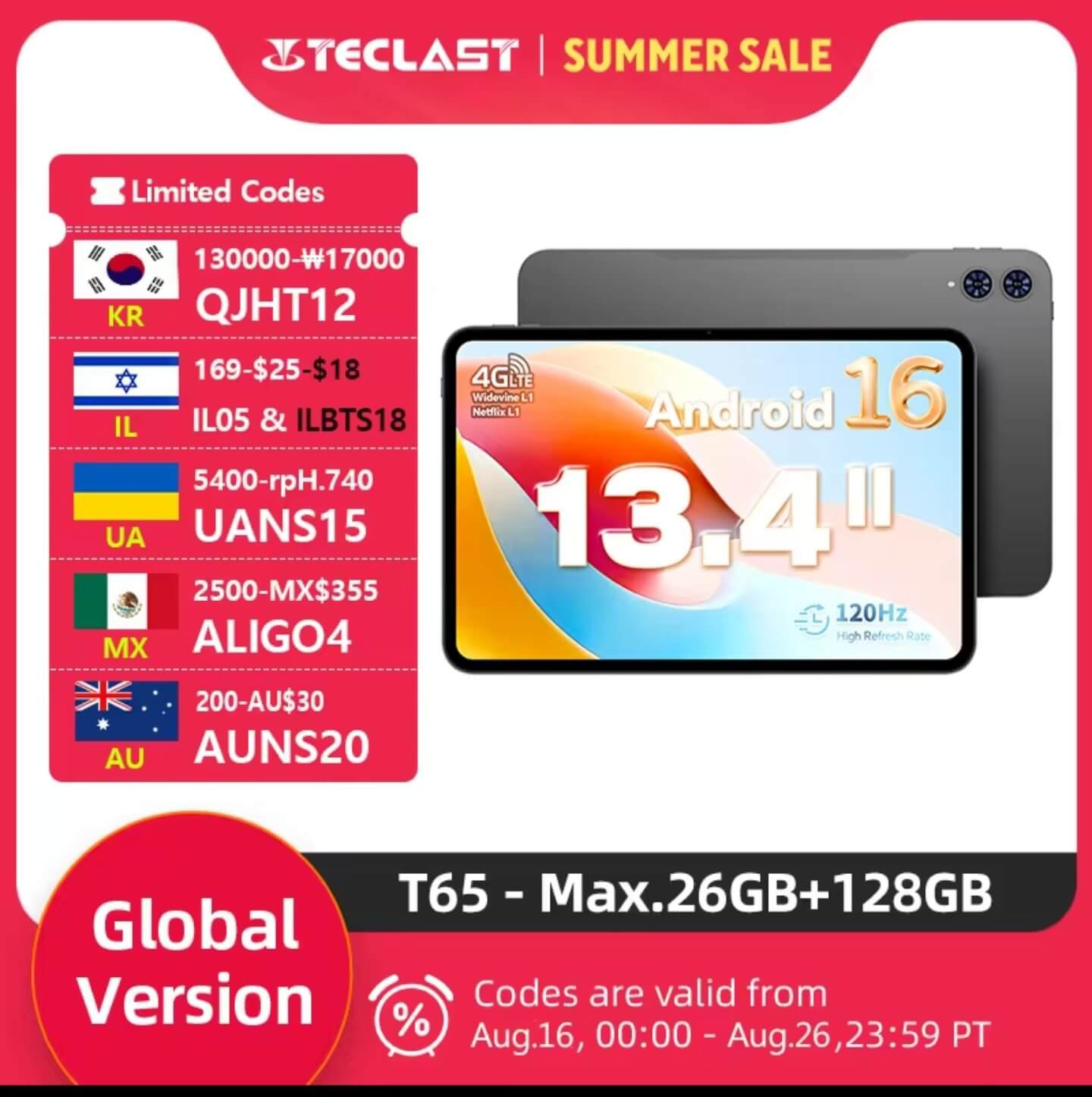
👇 Check Live Price on AliExpress – Prices Change Daily!
The Teclast T65 is built around one pitch: give you numbers that usually belong to $400+ tablets, at less than half the price. It’s the spec-sheet winner of the two, at least on paper.
- 💰 Regular Price: $452.75 |
- Welcome Deal: $190.69 (new shoppers save $262.06)
- ⭐ 4.7 rating, 500+ sold
Key Features
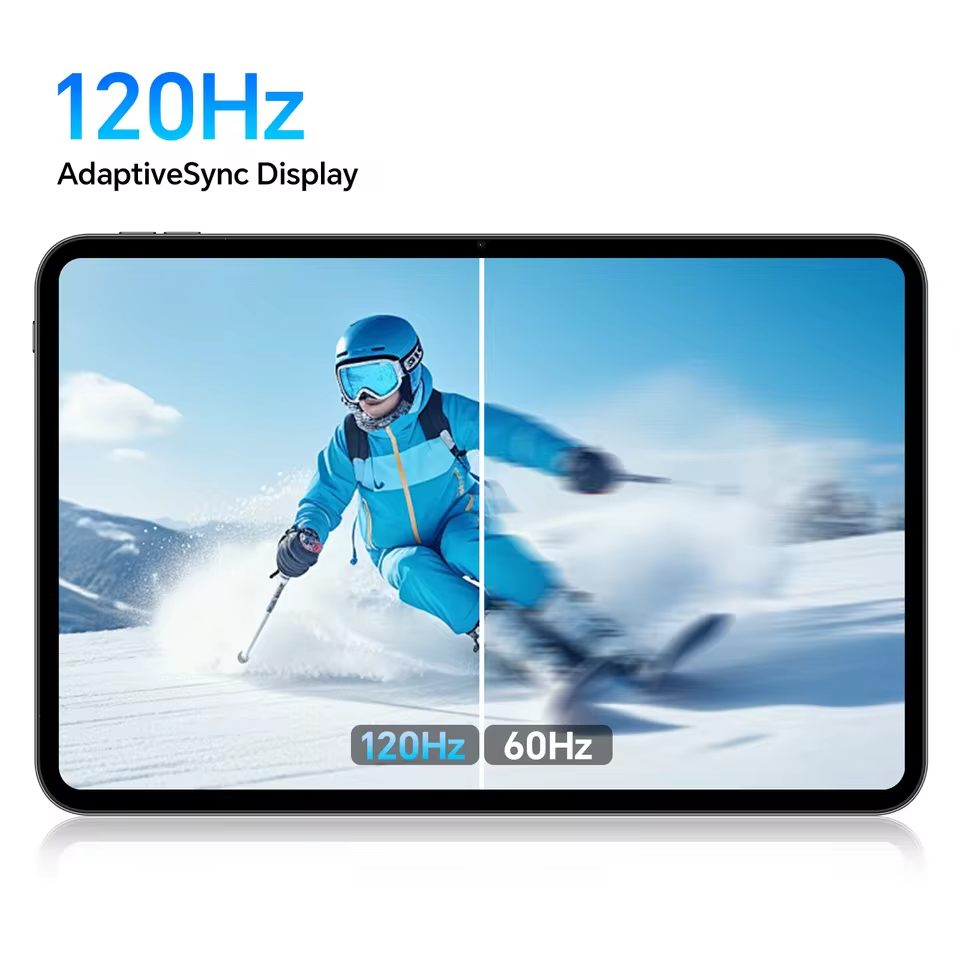
- 🖥️ 13.4-inch 2K display with a 120Hz refresh rate — rare at this price point
- ⚡ Unisoc T7280 Octa Core processor
- 🤖 Runs Android 16 with DRM L1 certification (so Netflix/Prime Video play in HD, not blurry SD)
- 🔋 8000mAh battery, Type-C fast charging (10000mAh on some configs)
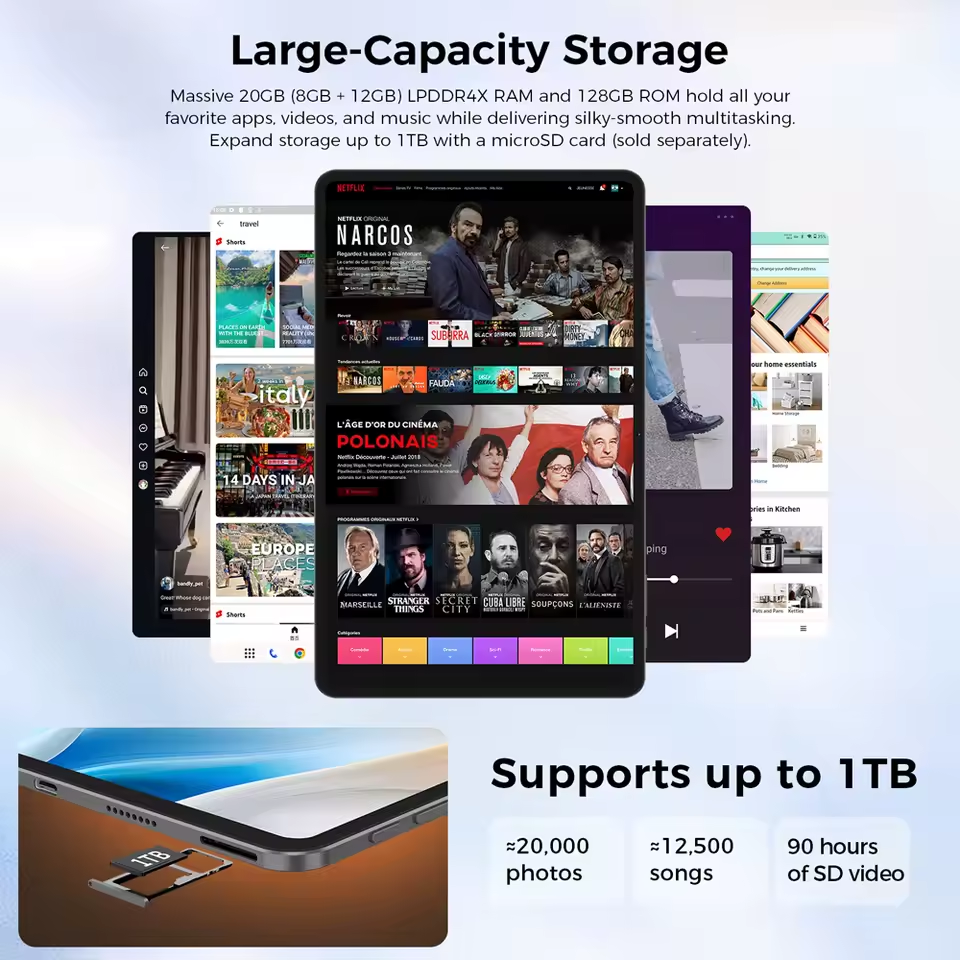
- 💾 Up to 6GB RAM + 256GB storage, LTE version available
- 🛡️ 1-Year Warranty + 24-hour fast shipping
- Biggest, sharpest, smoothest screen in its price bracket
- DRM L1 means real HD streaming, not a fake spec
- Generous storage headroom for the price
- Aggressive welcome-deal pricing for new buyers
- Unisoc chipsets lag behind MediaTek/Snapdragon in raw benchmark performance and long-term app support
- Lesser-known brand — fewer long-term reliability reviews
- Software update track record isn’t as proven as Lenovo’s
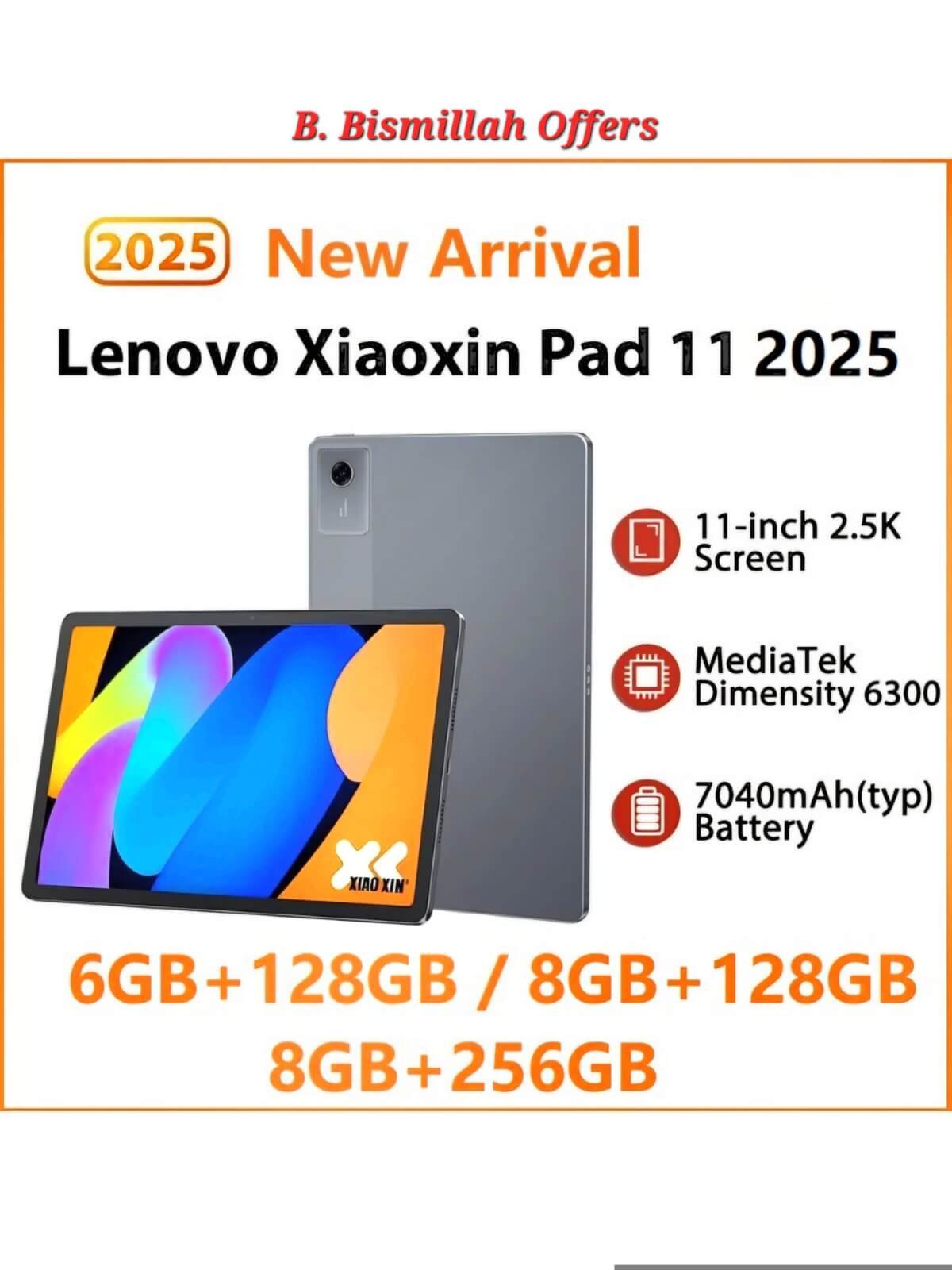
🔵 2. Lenovo Xiaoxin Pad 11 (2025) — ~$215 (Welcome Deal)
👇 Check Live Price on AliExpress – Prices Change Daily!
The Xiaoxin Pad 11 leans on the one thing Teclast can’t fully compete with: it’s a Lenovo. Same factories, same supply chain, same after-sales network as the tablets sold in Best Buy and Amazon under the Lenovo Tab name.
- 💰 Regular Price: ~$450 equivalent |
- Welcome Deal: ~$215 (region-dependent, checkout in local currency)
- ⭐ 4.9 rating, 10,000+ sold
Key Features
- 🖥️ 11-inch 2.5K screen (sharper pixel density than the T65, smaller size)
- ⚡ MediaTek Dimensity 6300 chipset — a known, well-benchmarked performer
- 🔋 7040mAh battery (typical)
- 💾 Configurable up to 8GB RAM + 256GB storage
- 🚚 Free shipping, free returns within 90 days, buyer protection on delivery delays
pros cons who should buy
- MediaTek Dimensity chip outperforms Unisoc in multitasking and app compatibility
- Massive sold count (10,000+) and near-perfect rating — real proof of demand
- Lenovo’s name carries actual resale and support value
- Strong buyer protections (refund if lost, refund if damaged, 90-day returns)
- Smaller screen than the T65 for a similar or slightly higher price
- No 120Hz refresh rate mentioned — standard refresh only
- LTE variant availability is less clear than the T65’s
| Side-by-Side Comparison | ||
|---|---|---|
| Spec | Teclast T65 | Lenovo Xiaoxin Pad 11 |
| Screen size | 13.4″ Bigger | 11″ |
| Resolution | 2K | 2.5K Sharper |
| Refresh rate | 120Hz 120Hz Smooth | Standard |
| Chipset | Unisoc T7280 Octa Core | MediaTek Dimensity 6300 Faster |
| Battery | 8000–10000mAh Longer | 7040mAh (typical) |
| Max RAM/Storage | 6GB / 256GB | 8GB / 256GB More RAM |
| Rating | 4.7 (500+ sold) | 4.9 (10,000+ sold) Popular |
| Welcome deal price | $190.69 | ~$215 |
Design & Build Quality Compared
Neither tablet is going to win a premium-materials award, but there are real differences worth knowing before you buy. The Teclast T65 leans into a larger, thinner-feeling chassis built around its 13.4-inch panel — it feels more like a portable entertainment screen than a device you’ll hold in one hand for long reading sessions. I noticed the bezels are slimmer than what Teclast usually does, and honestly, that dual rear camera setup gives it a bit of a flagship look in photos, even if the actual cameras are nothing special.
The Xiaoxin Pad 11, on the other hand, just feels easier to live with day to day. Its 11-inch size means your wrist isn’t fighting you during a commute or late-night reading in bed, and Lenovo’s mix of metal and plastic actually feels a touch more premium in hand, smaller screen or not. So really, it comes down to this — if you’re going to be holding it a lot, the Lenovo wins. If screen size is your priority, the Teclast pulls ahead.
Display Deep Dive: Does 120Hz Actually Matter Here?
Honestly, that 120Hz screen sounds impressive on the T65’s spec sheet, but here’s the thing — it barely matters for half of what you’ll actually do with it. Watching Netflix or a random YouTube clip? You literally won’t notice the difference, since most video is capped at 24-30fps anyway. Where it does matter is scrolling through your feed or flipping between browser tabs — that snappy feeling is genuinely there.
The Xiaoxin Pad 11 goes a different route. Less smooth, sure, but that 2.5K screen makes small text look noticeably crisper — I picked up on this especially when I was reading through some PDFs. Honestly, neither tablet “wins” here, it just depends on what you’re going to be doing with it most. Want fluid scrolling and a bigger canvas? Go T65. Care more about crisp text and something a bit more compact? The Xiaoxin’s the one.
Battery Life: Numbers vs Reality
Stated battery capacity only tells you half the story here. Sure, the Teclast T65’s 8000-10000mAh cell sounds a lot bigger than the Xiaoxin Pad 11’s 7040mAh battery, and on paper that should mean way more runtime. But here’s the catch — pushing 120Hz on a larger 13.4-inch screen eats up noticeably more power than running a smaller 11-inch panel at standard refresh rate. So in real-world use, that battery gap you’d expect from the numbers ends up shrinking quite a bit — the T65’s bigger battery basically cancels out its higher power draw.
Drop the T65 down to 60Hz for stuff like watching videos, and you’ll probably land somewhere close to or even ahead of the Xiaoxin Pad 11 in battery life. But if you’re the type who keeps 120Hz on all the time just for that smoothness, don’t be surprised if the real gap turns out smaller than what the mAh numbers make it look like.
Software Experience and Update Support
This is an area where brand reputation genuinely matters. Lenovo has an established pattern of pushing security patches and minor OS updates to its budget tablet line, even if major Android version upgrades aren’t guaranteed. Teclast, as a lesser-known brand, doesn’t have the same public track record — the T65 running Android 16 out of the box is a good sign, but how long it will keep receiving updates is harder to predict with confidence.
If long-term software support and security patches matter to you — for example, if this tablet will be used by a child or for online banking/shopping — the Xiaoxin Pad 11’s brand backing adds a layer of reassurance the T65 can’t fully match yet.
Real-World Performance: What the Benchmarks Don’t Tell You
Both chipsets — Unisoc T7280 and MediaTek Dimensity 6300 — sit in the same rough performance tier, but they behave differently under sustained load. The Dimensity 6300 has a more mature software optimization history since MediaTek chips are far more common globally, meaning app developers test against them more often. This usually translates to fewer random app crashes and better long-term compatibility as Android versions update.
Unisoc chipsets, including the T7280, have historically lagged slightly in GPU-heavy tasks and multitasking with many apps open simultaneously. For basic use — browsing, streaming, social media, e-books — you won’t notice a meaningful difference. But if you plan to keep multiple heavy apps running at once, or use the tablet for 2-3 years without upgrading, the Dimensity 6300’s track record gives it a practical edge.
How Do They Compare to Other Budget Tablets?
If you’ve been browsing around and noticed the Amazon Fire HD 8 (2024) or the Samsung Galaxy Tab A11 pop up too, worth being upfront about where they stand. Both are decent, well-known tablets in this price bracket, but honestly, neither one touches what you get with the T65’s 120Hz screen or the Dimensity chipset powering the Xiaoxin Pad 11.
The Fire HD 8 basically only makes sense if you’re already deep into Amazon’s ecosystem — Prime Video, Kindle books, that whole world. If you’re not, it starts feeling pretty limiting fast. The Galaxy Tab A11’s got that clean Samsung software feel going for it, but you’re paying similar money for noticeably weaker specs. So if what you actually care about is a good screen and getting the most performance for your dollar, the two tablets we’ve been comparing are still the better bet.
Who Should Skip Both of These Tablets?
Let’s be real for a second — if you’re planning to do serious gaming, video editing, or any kind of professional creative work, honestly, skip both of these. You’d be way happier with a mid-range Snapdragon or an Apple-chip device, even if it costs more upfront. The T65 and Xiaoxin Pad 11 are built around a different idea entirely — streaming shows, browsing, reading, jotting down notes, maybe some casual gaming here and there. Go in expecting flagship-level multitasking or proper 3D gaming, and you’re just setting yourself up to be let down.
So Which One Should You Actually Buy?
Here’s the part most comparison articles skip: these two tablets aren’t really competing for the same buyer.
- If you mainly want a big-screen video and reading tablet — Netflix, YouTube, comics, PDFs, browsing in bed — the Teclast T65’s 13.4″ 120Hz panel is the better sensory experience per dollar, and DRM L1 means you’re not stuck with soft-focus streaming.
- If you want a tablet for schoolwork, note-taking, or light productivity where app stability, chipset consistency, and long-term software support matter more than screen size, the Lenovo Xiaoxin Pad 11 is the more dependable pick — the Dimensity 6300 simply handles multitasking better than Unisoc silicon, and Lenovo’s sold/rating numbers reflect a track record the T65 hasn’t built yet.
Neither is a “flagship killer” — both are Unisoc/MediaTek mid-range chips wearing budget-tablet clothes. But for under $200, that’s the honest tradeoff you’re making either way.
FAQs
Yes — for its price, the 120Hz 2K screen and DRM L1 certification are genuinely rare features, making it one of the better budget tablets under $200 for video and streaming use.
If you’re specifically comparing 11-inch tablets in this price range, the Xiaoxin Pad 11 stands out for its MediaTek Dimensity chipset and Lenovo’s brand reliability, which most no-name 11-inch tablets in this bracket don’t offer.
The Teclast T65 has a larger stated battery capacity (8000-10000mAh) versus the Xiaoxin Pad 11’s 7040mAh, though real-world battery life depends heavily on screen refresh rate and brightness settings.
Neither chipset (Unisoc T7280 or Dimensity 6300) is built for heavy gaming — both handle casual and mid-tier games fine, but skip them if 3D gaming is your main use case.
Yes — the T65 has DRM L1 certification, which means Netflix, Prime Video, and similar apps stream in full HD instead of being capped at blurry SD quality, unlike many budget tablets that only support DRM L3.
Both handle video calls and basic productivity apps fine, but neither has a dedicated stylus or keyboard accessory ecosystem as robust as higher-end tablets, so treat them as consumption-and-light-work devices rather than full productivity replacements.
The Lenovo Xiaoxin Pad 11 is generally the safer pick for kids or first-time buyers due to Lenovo’s more established software update history and brand support network.
Check the specific listing at time of purchase — configurations vary by seller, and LTE/storage options can differ between regional listings on AliExpress.
About the Author: Asif Ali
Asif Ali covers budget tablets and displays at Bismillah Offers, comparing real specs side-by-side to help readers avoid overpaying for marketing gloss.
Final Verdict
Both tablets earn their spot on a “best tablet under $200” list, but for different reasons. The Teclast T65 is our pick if you want the most screen and the smoothest visuals for the least money — the 120Hz 2K panel and DRM L1 support are genuinely hard to find below $200. The Lenovo Xiaoxin Pad 11 is our pick if you’d rather trust a proven chipset and a brand with a real track record, backed by 10,000+ sold units and a 4.9 rating.
Our overall recommendation: if you’re buying your first budget tablet and want the safer, more reliable option, go with the Lenovo Xiaoxin Pad 11. If you already know what you’re getting into with lesser-known brands and just want the best screen for your money, the Teclast T65 is the better deal. 🏆
Recommended For You
OTOFIX D1 Lite Review 2026: Best Bluetooth OBD2 Scanner Compared 🔧🚗
NYXI Hyperion 3 Wireless JoyPad Review: Is it Worth it? (Honest After-Use Review)
Tablet Pad 7 Ultra Honest Review: Real Specs, Price, And Is It Worth Buying?
Bitfunx RetroScaler2x Review: Is It Worth It? (Honest After-Use Review)
Lenovo GT100 Review: Is it Worth It? (Honest After-Use Review)
Kinhank Super Console X5 Pro Review: Is This $301 RK3588 Retro TV Box Worth It?
Retroid Pocket 5 Review: I Tested This AMOLED Retro Handheld Before You Buy
SC64 Open Source N64 Flash Cart Review: Is This $37 EverDrive Alternative Worth Buying?
vSeeBox V6 MAX vs. V6 Plus Review: Which 2026 8K Android TV Box is Best for You? 📺.
Xiaomi Mijia Air Pump 2 Pro vs Baseus 2-in-1: The Best Portable Tire Inflators of 2026 🚗💨
Best WiFi 7 Router 2026: Xiaomi BE6500 vs GL.iNet Flint 2 vs GL.iNet Flint 3 (Full Comparison) 🚀
LZAKMR AK1 Retro Game Console Review: Is This $265 Win11 & Batocera Mini PC Worth It?
Get the deal alert, not the spam.
One email when this exact product — or something we've personally tested and rated — drops to its lowest verified price. No daily emails, no random affiliate spam, unsubscribe anytime.
Looking for More Deals Like This?
Browse verified AliExpress listings with live pricing and honest ratings.